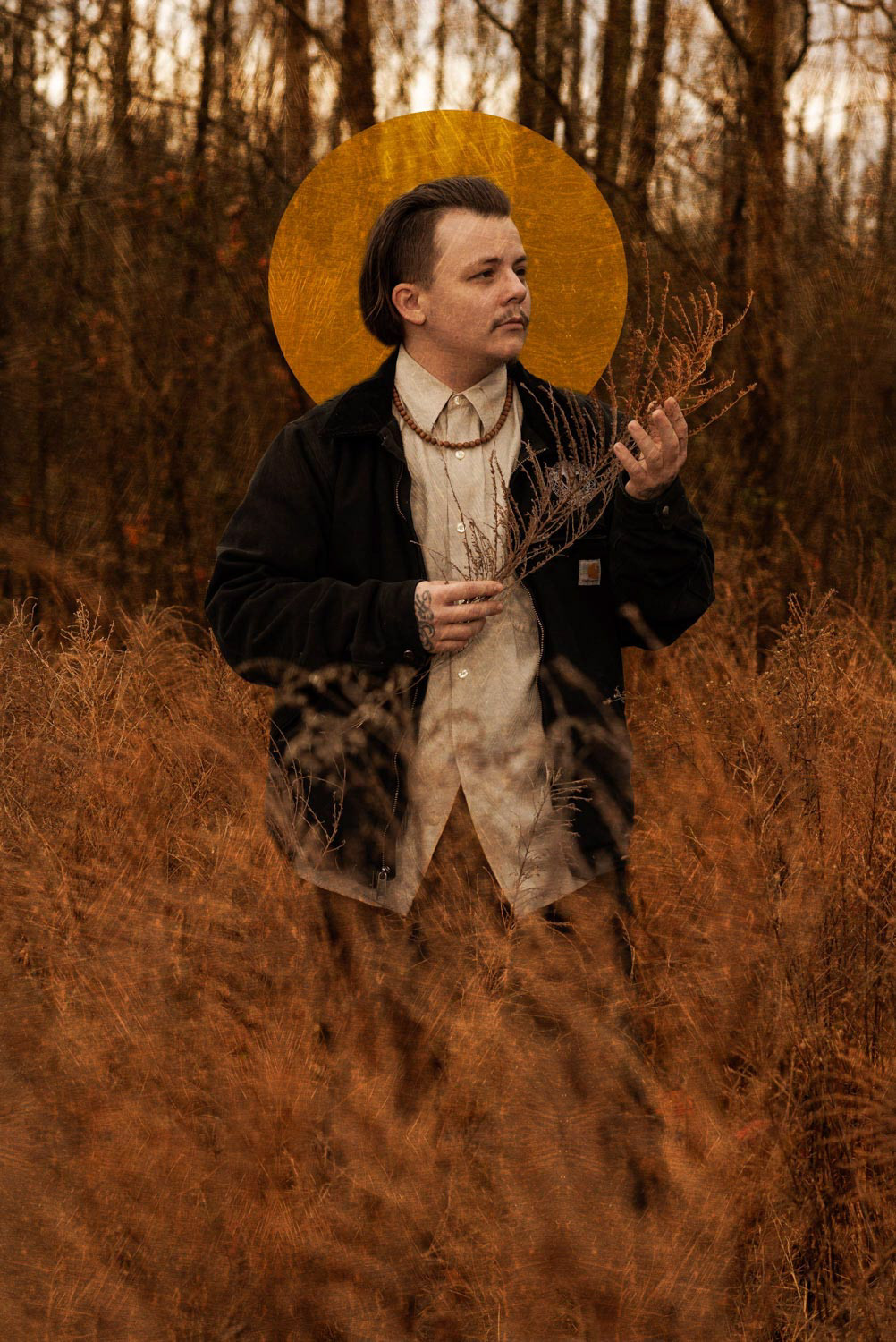
"I would say it's a long road, but a beautiful journey. I think it's important to ask more questions and be okay with not having answers."
How has your queer identity and faith identity intersected?
I have found myself wanting to help other queer people, especially those who have felt harmed by the Christian community, to rediscover their divinity. I guess the beginning of how they intersect is realizing that queer and trans people are sacred and they deserve spirituality as well. And hoping that I can be an example for people to see that.
How has your faith influenced your coming out process?
I would say the only way that it really did was that my parents were Christian and I knew it was going to be a big thing. I never believed that it was wrong, but I was existing in a world where that's what I was being told. And so there was a certain level of having to keep it a secret for a long time.
When did you know that you were indeed loved by God?
In my journey of seeking and trying to break free from Christian programming, I've had a number of mystical experiences where I've really connected on a deep level. The idea behind the mystical experiences, it's really hard to explain in words, but it was just like that oneness in that moment of, “Oh, wow! There is something more here, and this is the first time I've actually experienced that."
I remember one specifically. I was in the woods and I was just leaning up against a tree and I looked up. It was Fall and the leaves were just above me on the branches and I kind of just went somewhere else. It was like this connection that I had never felt.
It was definitely positive. I remember really just smiling and laughing. It was sort of like joy, almost overtaking. It affirmed the things that I wanted to believe. And it's tough because we don't always get the physical feeling, and I guess that's where faith comes in, right? But in that moment, that's what I needed or wanted.
Do you have any scripture or sacred texts that you connect to?
I really connect with the mystics from many different traditions and no tradition at all. John of the Cross, Hafez, Gloria Anzaldúa. They have become companions for the journey not because they offer certainty, but because they hold space for mystery, struggle, and transformation.
What advice would you have for other queer people of faith?
I would say it's a long road, but a beautiful journey. I think it's important to ask more questions and be okay with not having answers. And to push back against the dominant narratives that you've been fed and try and find that personal connection.
A lot of the people I interviewed made these differentiations between Christians and the Christian God. And one person even said- I said, “How do you go to church with people that you know don't agree with you?” And he was like, “To be honest with you, it's just about the energy and being in the presence of that energy.”
And so I think it's reestablishing that personal connection with God first, and then trying to find community that supports you after the fact.
What do you see as your ministry?
My long-term ministry is to have a retreat center kind of vibe that is situated in nature, in the woods. And for people to come there, and us to connect with each other, and try to find ways to reconcile [and] realize their divinity. I want it to be in a space where we're being held by the natural world. And then also a certain element of the hard survival skills: how to build a shelter, how to make a fire, stuff like that. I want to intertwine those two into this growth experience for people to be a part of.